Who Benefits More From the USRDA’s 2,000 Calories Per Day? You or Big Agra?

Those U.S. guidelines might not be good for our health

It’s a simple enough question: why are all the nutrition labels in the U.S. standardized to 2,000 calories per day?  Who chose that number?  Is it an accurate representation of what we should follow?
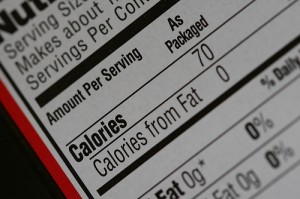
I was having this exact conversation with my friend @Krazy_Kris on Twitter last week.  She’s been living healthier, exercising, and blogging about her journey.  She’d been following the USDA recommended 2,000 calories per day and hadn’t lost any weight.  Huh, she thought, started researching, and discovered she needed to eat a few hundred calories less each day in order to lose about a pound a week.  She was annoyed, feeling a bit misled by her government.

What your daily calorie count should be varies quite a bit; it depends on age, weight, gender, amount of exercise, lifestyle, medical issues, etc. There is no true cookie cutter number that applies for everyone.  Kris asked me where the 2,ooo calorie amount came from and I honestly didn’t know, so I went to find out.  I was furious when I uncovered the answer.

I found the Executive Summary for the USRDA guidelines at health.gov, the U.S. Department of Health & Human Services’ health promotion website.  These documents can be hard to decipher.  I think the phrase “politically correct” emanated from people trying to write government documents that reflect the views of a combination of experts, lobbyists, and elected official interests … Anyway, there were key sections that jumped out at me:

Throughout most of this publication, examples use a 2,000-calorie level as a reference for consistency with the Nutrition Facts Panel. Although this level is used as a reference, recommended calorie intake will differ for individuals based on age, gender, and activity level. At each calorie level, individuals who eat nutrient-dense foods may be able to meet their recommended nutrient intake without consuming their full calorie allotment. The remaining calories ~ the discretionary calorie allowance (my emphasis) ~ allow individuals flexibility to consume some foods and beverages that may contain added fats, added sugars, and alcohol. ~ USDA Executive Summary

Lobbyist Fingerprints

Additionally, in a prior paragraph the Executive Summary said the 2,000 calorie per day recommendation was based on “population weighted food intakes.”  That is, Americans are already eating 2,000 calories per day, so we’ll just overlay the proper nutrient balance on top of those calories.  There is no daily calorie recommendation at all built into the side of our food packaging; it’s based on what Americans already take in.  As in our population which is 66% either overweight or obese.

Meanwhile, the pull-out quote above recommends that Americans eat nutrient dense foods and then blow the extra calories on fat, sugar, and booze. Are you serious?  Does anyone think a group of well-educated nutritionists inserted that line?  No ladies and gentlemen we’re looking at the work of a very strong food lobby.

So How Many Calories Do You Need?

I went in search of a chart with the recommended daily calorie levels and couldn’t find one!  I spent a good hour surfing through government sites.  The only thing I found was the MyPyramid.gov page which does have a handy calculator, but it gives you the daily value for the “nutrients you should consume for your weight and gender and lifestyle.”  This means it calculates the calories you need for weight maintenance, not weight loss.  I plugged my own data in and got 2,200 calories per day with nearly 300 calories for “excess,” i.e., the sugar, fat, and booze mentioned above.

I can tell you right now if I eat 2,200 calories per day I’ll gain weight.  The MyPyramid page helpfully suggests, “Your calorie needs may be more or less than average so check your weight regularly.  If you see unwanted weight gain, adjust the amount you’re eating.” Um, yeah, thanks for that … sheesh.

So how do you find out what your daily calorie intake should be?  Honestly, the best you’re going to get is a general guideline.  There are lots of calculators available and Kris mentions a few in her blog post.  This is the one I use which is based on research out of the University of Maryland.

Why We Need to Educate Ourselves

Most of the numbers these other calorie calculators recommend are lower than the U.S. guidelines.  Again, the food and agricultural industries don’t make more money if you eat less.  The food lobbyists are pushing as hard as they can to nudge those numbers upward.  They want you to eat more.

We can get great information from registered dietitians.  If you can get a referral from your doctor to see one I strongly urge you to do so.

What do you think?  Are you as furious as I am?  Do you feel saddened that the U.S. government is taking good information and twisting it just enough to confuse and lead us astray?  How are we going to improve our health if the government is giving us questionable information to begin with?  Where do you get your nutritional information?

Let me know your thoughts …

Thanks,

Lisa

About Lisa Johnson

Lisa Johnson here. I've been a personal trainer since 1997, a Pilates instructor since 1998 and the owner of Modern Pilates since 1999. I'm hoping to give you some good ideas to get or stay in shape with a healthy dose of humor and reality. Thanks for joining me.

, , ,

19 Responses to Who Benefits More From the USRDA’s 2,000 Calories Per Day? You or Big Agra?

  1. Charity Froggenhall December 12, 2010 at 9:30 pm #

    My understanding was that the 2,000 calorie level was for weight maintenance, not losing. But yes, everything in this country, even our food, has been ceded by the government to corporations. They have almost the same rights as individuals and pay far less tax. But what will the food companies do when their main audience starts dying off from high cholesterol and diabetes?

  2. Lisa Johnson December 12, 2010 at 10:10 pm #

    Charity you’re right the 2,000 calorie is for weight maintenance, but NOT for all people … just for a few. For some people it would be weight loss and for others (like myself) it’s weight gain …

    Where will the food companies go after we start dying off in droves (we actually already are …) my guess? Asia … think big Tobacco, they’ll follow their path …

    L–

  3. Kris @Krazy_kris December 12, 2010 at 11:29 pm #

    Heya Lisa –

    This was so much fun to work on with you. I’m not surprised at all at what you found out. When I first looked into it, my gut told me that the basis for the 2,000 calorie number was probably completely flawed. And no wonder folks have weight problems.

    Love your other calorie post, it looks like some of the calculations are fairly standard. And VERY cool that you have a rockin hot metabolism.

    Hmmmm… maybe I need one of those nifty little gadgets ;-)

    Thanks again!

  4. bridget December 12, 2010 at 11:38 pm #

    I know for a fact that a blanket 2K calorie a day allowance will make/keep me fat. I am sure the GOV has some sort of “formula”. Well, people dont fit formulas. The GOV is trying to do its job re: controlling diseases such as diabetes, heart disease, etc. But clearly the need to do more. Maybe you are the woman to do it!

  5. Suzanne @WorkoutNirvana December 13, 2010 at 12:25 am #

    No doubt, 2,000 calories/day is insane. It’s all very confusing, especially if you’re working out intensely and regularly. In that case, it will be a different number. And if you’re trying to gain muscle, it varies again.

    It’s maddening how corporations and lobbies really run this country. And it appears that’s what’s happening here.

  6. Lisa Johnson December 13, 2010 at 12:33 am #

    Kris, I think that nifty gadget costs about $2,000! But a lot of local gyms have them and you can go in and get your reading in about 20 minutes. It was very fun doing this, taking the same subject and everyone taking their own spin to it …

    Bridget, I’m trying to get the word out as much as possible. Knowledge is power … always!

    Suzanne, I actually think it’s an easy thing to misinterpret. We go to “official” sources when we’re looking to be more healthy (usually this means losing weight too) but the information doled out is skewed to maintenance, not weight loss. We go in with one mindset and expect to get that mindset back, and we don’t. It’s really disappointing, even more so when you think about the millions of dollars in research we pay to come up with these guidelines.

    Sigh.

    L–

  7. Dustin | Fit Marriage December 13, 2010 at 12:48 am #

    It’s interesting to see some of the documentation behind the 2,000 “example” but I’ve always realized it was simply an example and not a recommendation for calorie intake. It lets the food label info be broken down into percentages, which is easier for most people to understand.

    Of course, like most things, the problems arise when a lot of people (maybe even most?) don’t know that it’s an example and doesn’t actually apply to them. They think 2,000 calories is some magic number when it probably doesn’t actually apply to them.

    What do you suggest as an alternative? Different tiers of calorie allowances (could be even more confusing), no percentages at all, a lower “example” number?

    Great post, Lisa!

  8. Lisa Johnson December 13, 2010 at 8:55 am #

    Hi Dustin,

    I agree that an example of some sort needs to stay on the label. It’s more important to keep the information as clear as possible than to give a large array of numbers to consumers. But I’d like to see a page on health.gov somewhere where you could plug in age, gender, height, activity level and then goals … so you could get maintain weight with one set of numbers, lose a pound per week with another set of numbers, etc. That way an individual could see what they are supposed to be eating. They almost have that calculator. It would only be one more step to add it. It could really help a lot of people.

    With the calculator at MyPyramid.gov I suggest taking the number they give you and cutting off 500 calories per day and see how you do … it’s a start anyway. Or better yet, use one the other calculator I listed.

    Lisa

  9. Elizabeth December 13, 2010 at 10:19 am #

    Everyone has unique calorie needs, depending on your level of activity. You can work with a registered dietitian or use an online tool like http://www.mypyramid.com to determine how many calories you need. For young adults, they are often surprised by how much they need to eat to maintain their weight. For active young individuals, they may need over 2500 calories, but all fitness/beauty magazines create 1200/1600 calorie “diets” which can be misleading and harmful.

    as far as discretionary calories, they are included so that people can enjoy a few indulgences without feeling guilty. the more active you are, the more you get to enjoy those treats!

  10. Lisa Johnson December 13, 2010 at 10:37 am #

    Elizabeth, I just checked your site and I’m happy to have an (almost!) dietician hopping onto the conversation. Would do you think about the 2,000 calorie guideline as being potentially misleading? Do you think people could misunderstand what the information is intended to do?

    Also my calculator recommends 7 ounces of grains (only 50% whole grain), 3 cups veggies (that’s only 3 servings if raw), 2 cups of fruit, 3 cups of milk, and 6 ounces of meat and beans. Would you recommend that I eat the same proportions? I’m curious and would love your input!

    Thanks,

    Lisa

  11. Elizabeth December 13, 2010 at 11:12 am #

    Lisa,
    The point i wanted to get across is that everyone has very unique needs. While i’m not sure that putting 2000 calories on nutrition labels is helpful, it can help provide a rough estimate for % of daily intake that that food is providing. But you may need more or less than those 2000 calories. Knowledge is power, and the more people can learn about nutrition, the better.

    My pyramid is not perfect. I always say the more veggies and fruit the better, but if you were someone who was eating 0 servings of vegetables a day (like a scary % of the US population), 3 cups is a great start!!

    The nutrition community is very divided on the promotion of milk. Could there be bigag lobbyist in action there? most definitely.

    I highly recommend the book Food Politics by Marion Nestle if you are interested in learning the behind the scenes look at us food policy. It’s extremely enlightening.

    Personally, I think there is a lot more to food than calories in and calories out. I think intense focus on how many calories we are consuming each day, leads to obsession and disordered eating habits. What starts as a healthy interest can turn into unhealthy habits, which is something to keep in mind. How we eat is just as important as what we eat.

    Thanks for creating this great dialogue!

  12. Kerri O December 13, 2010 at 5:40 pm #

    Thanks for this. I keep getting told, oh, eat more, eat more…but when I eat more, I GAIN. I think we have to know our own bodies!

  13. Lisa Johnson December 13, 2010 at 8:30 pm #

    in the end, we need to learn to listen to our bodies. Some of us do it naturally (as we did when we were kids) some of us have lost it and have to relearn it. :-) Once you get it though, life is so much easier … cheers!

    L–

  14. julie December 15, 2010 at 5:43 pm #

    I went to a chemistry lecture at our local USDA building here, and was surprised by how much of their job is to push processed foods. They do other work that is much more interesting to me, would love to work there.

    I’m not much of a calorie counter, every once in a while I do, just out of curiosity, and I will maintain easily on 2000 kcal/day. Possibly even slowly lose. But I go to the gym 7 hours/week, bike 30 minutes to my job and back, walk to the grocery store, lift weights, kickboxing, hike, etc. If I didn’t exercise, I’d probably gain on 1600.

  15. Lisa Johnson December 15, 2010 at 6:49 pm #

    Julie thanks so much for the comment. Always good to get an insider industry perspective. Lisa

  16. eric May 9, 2011 at 12:00 pm #

    Don’t be mad at the government, be mad at yourself for not taking your health into your own hands sooner. Everyone knows the government contains only greedy buisness-minded idiots, what took you so long to figure that out?

  17. deirdre May 28, 2011 at 4:10 pm #

    I have been doing a literature review all day trying to find the origination of the 2000cal/day reference – I found a great FAO report on exactly how the average needs of a population can be determined, and I found an MMWR that gives the average amount men and women of varying ages are consuming on average, over time – from NHANES data, unfortunately, it does not say if the people who’s information they averaged were of normal or overweight. since there is only about 30% chance they were normal weight I will guess not. I am feeling the same as you are – we are talking about what people are doing and what people are doing is eating too much… I worry about this now because of the new menu laws, which I fully support, except that the mandate again tells the food provider to make a reference to 2000 cals a day! Women probably need 1800 or less – since we do not get the recommended excercise either. Of course, that is a health educators opinion, and individual caloric requirements can only be estimated by nutritionists. Well – back to my search….. BTw, I have read surgeon generals reports today as well, they just keep saying to eat less, moderate calories and even 20% of calories should be x, but no recommended average intake appears in those pages…..

  18. deirdre May 28, 2011 at 4:21 pm #

    Well after all that, I think I found the origin here:

    http://www.nap.edu/openbook.php?isbn=0309046335

  19. Lisa Johnson May 28, 2011 at 11:25 pm #

    Deirdre, thank you for this. I really appreciate you taking the time. I’m clicking through the links now … appreciate it! You should do a guest post for me! L–

Leave a Reply